
Is food in a lunchbox left in a car still safe?
Daniel Follett
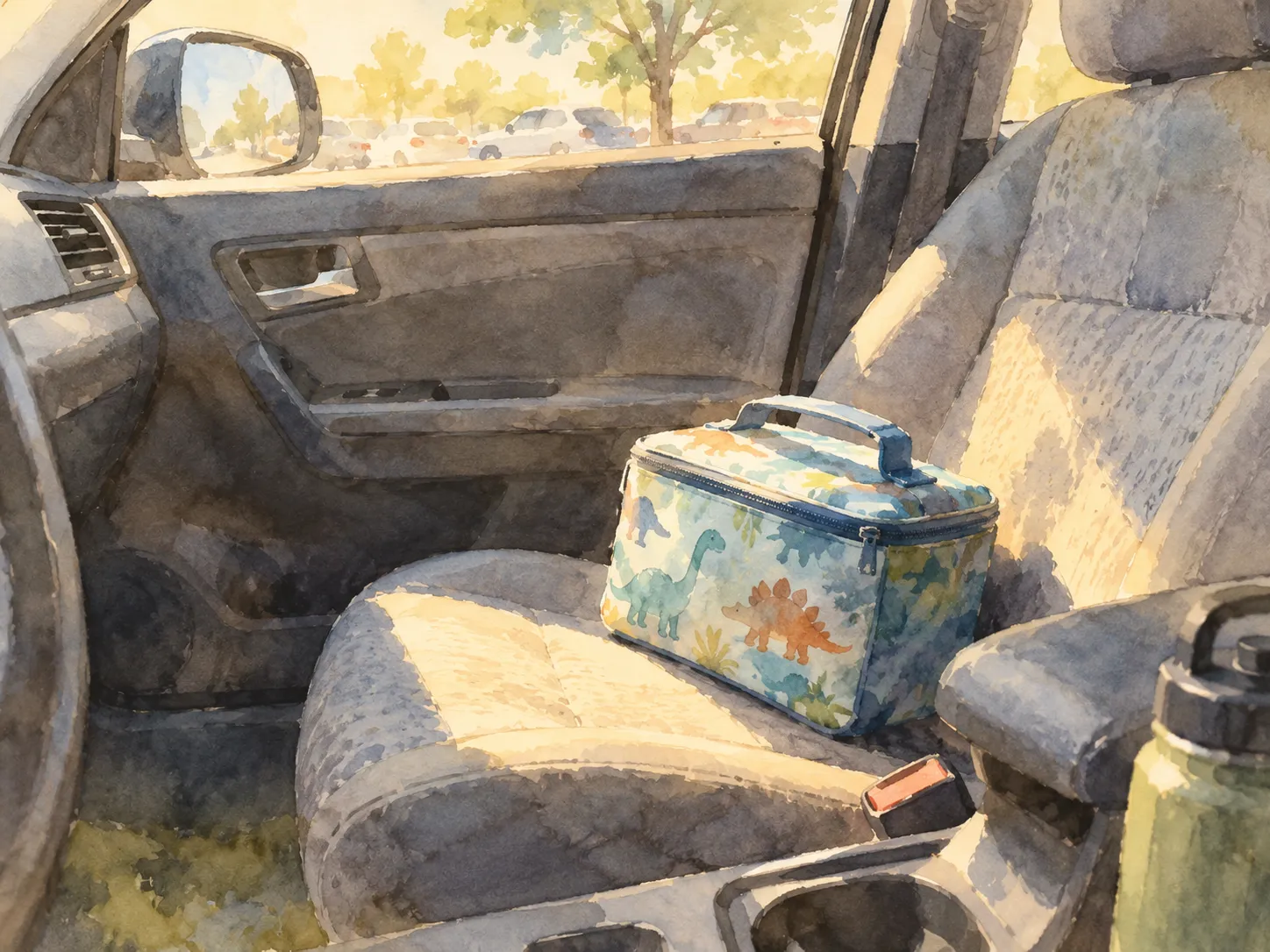
A lunch packed for school or work sometimes can accidentally spend the day in a parked car. Whether it is still safe depends on how warm it got and for how long: a perishable lunch can remain safe outside a refrigerator when cold packs keep it at 40°F or below. Once it warms past 40°F, the CDC says to refrigerate it within two hours, or within one hour if it has been exposed to temperatures above 90°F, such as in a hot car. If the food has exceeded those limits, the safe move is to discard it.
Which lunchbox foods are perishable?
Start with the ingredients that normally belong in the refrigerator: deli meat, cooked chicken, egg or tuna salad, cheese, yogurt, milk, cut melon, cut fruit, and leftovers. The CDC specifically lists meat, seafood, dairy, cut fruit, some vegetables, and cooked leftovers as perishable foods that should be refrigerated within two hours. That is why a turkey-and-cheese sandwich is not automatically safe just because the bread is dry: the perishable ingredients determine how carefully the lunch needs to be handled.
A whole piece of uncut fruit and a sealed shelf-stable snack have different storage needs from cooked chicken or a yogurt cup. For perishable foods, count the time they spend warm, above 40°F, or otherwise away from its cold packs. A lunch held at 40°F or below by its cold packs is not using up the two-hour limit just because it is outside a refrigerator. Warm time can include the car, a backpack, a desk, and any wait before lunch; bringing the lunch indoors does not restart the clock.
Why a parked car is risky
Bacteria can multiply quickly when food is left the Temperature Danger Zone between 41°F and 135°F. A closed car can become much hotter than the surrounding air, especially in direct sun, but you do not need to guess the exact temperature inside the vehicle. If the food was exposed to temperatures above 90°F, use the one-hour rule. An insulated lunchbox can slow warming, but closing it does not create refrigerated storage. It works best when the food starts cold and the bag contains cold sources that keep the food at 41°F or below. A shaded parking spot, a short drive, or a lunchbox that feels cool on the outside does not prove that the food stayed at a safe temperature.
How to pack a safer lunch
USDA's Food Safety and Inspection Service recommends at least two cold sources for lunches eaten away from home. It suggests two frozen gel packs, each at least 5 by 3 inches, or one frozen gel pack combined with a frozen juice box or frozen bottle of water. Freeze the packs overnight and place the cold sources above and below the perishable food. Keep the lunch closed until it is time to eat. If a refrigerator is available at school or work, using it when you arrive adds an easy margin of safety. When that is not an option, take the lunch with you rather than using the vehicle as storage.
For hot food, FSIS recommends an insulated container for soup, chili, or stew. That container is not a temperature measurement, so do not assume it kept the food safe indefinitely; if food enters the Danger Zone, the same warm-time limits apply. If you use a cooler, FSIS says leftover food is safe only if the cooler still has ice. If the ice is gone, discard the leftovers. When reliable cold storage is not possible, choose foods that are shelf-stable according to their labels.
What to do if the lunch warmed up
Start by reconstructing the timeline. If a perishable lunch sat in an ordinary indoor environment for more than two hours, or in a hot car or other setting above 90°F for more than one hour, discard it. Putting it back in the refrigerator does not erase the time it spent warm. If you know it stayed within the applicable limit, refrigerate it promptly and keep it cold from that point forward. If you cannot establish how long it was warm, discard it. FDA guidance says food can make you sick even when it does not look, smell, or taste spoiled because pathogenic bacteria are different from the spoilage bacteria that make foods go bad. A sour smell, mold, or another suspicious change is a reason to throw food away; a normal smell is not a safety clearance. For a lunch headed to a parked car, keep perishable food at 41°F or below with cold packs, count the time it spends warm, and do not assume refrigeration resets the clock.