A food handler certificate is a critical requirement for anyone who works with food in restaurants, grocery stores, schools, healthcare facilities, and other food service operations. This comprehensive guide covers everything you need to know about obtaining and maintaining a food handler certificate, including state-specific requirements, exam preparation strategies, training options, and career benefits.
What is Food Handler Certificate?
A food handler certificate is an official credential that demonstrates an individual has completed training in food safety principles and practices. The certification verifies knowledge of proper food handling techniques, personal hygiene, cross-contamination prevention, temperature control, and foodborne illness prevention.
The FDA Food Code recommends that all food employees receive training in food safety, though specific requirements vary by state and local jurisdiction. Most certification programs are based on the FDA Food Code and cover the same core competencies, ensuring consistent food safety standards across the industry.

Key Components of Food Handler Training
Certification training typically covers six major areas: personal hygiene and health, preventing cross-contamination, time and temperature control, cleaning and sanitizing, safe food preparation, and receiving and storage. Each area includes both theoretical knowledge and practical application to ensure food handlers can apply concepts in real-world situations.
The training emphasizes critical control points in food handling where contamination is most likely to occur. Understanding these points helps food handlers make informed decisions that protect public health and prevent foodborne illness outbreaks.
Who Needs a Food Handler Certificate?
Requirements for a food handler certificate vary significantly by location, but generally include anyone who works directly with food in a commercial setting. This encompasses restaurant staff, cafeteria workers, caterers, food truck operators, grocery store employees in deli or bakery sections, institutional food service workers in schools and hospitals, and temporary event food vendors.
Restaurant and Food Service Employees
All employees who prepare, handle, or serve food in restaurants typically need certification. This includes cooks, prep cooks, servers who handle food, bartenders who prepare garnishes, dishwashers who may handle clean dishes, and managers responsible for food safety oversight. Even employees who work with packaged foods may need certification depending on local requirements.
Retail Food Establishments
Grocery stores, convenience stores, and specialty food shops require certification for employees working in departments that prepare or package food. Deli workers, bakery staff, seafood counter employees, butchers and meat department workers, and employees who prepare ready-to-eat foods all typically need a food handler certificate.
Institutional Food Service
Schools, hospitals, nursing homes, daycare centers, and correctional facilities have especially stringent food safety requirements due to serving vulnerable populations. All food service staff in these settings typically require certification, and some jurisdictions mandate more advanced food protection manager certification for supervisory staff.
State-by-State Requirements
Food handler certificate requirements vary considerably across the United States. Some states mandate certification for all food handlers, while others only require it for certain types of establishments or leave requirements to local health departments. Understanding your specific state requirements is essential for compliance.
States with Mandatory Certification
California, Texas, Illinois, Arizona, and several other states require a food handler certificate for most food service workers. California AB 1978 requires food handler cards within 30 days of hire for employees in food facilities. Texas requires certification within 60 days of employment. Illinois requires both a food handler certificate and food protection manager certification depending on the role.
States with Local Jurisdiction Authority
Many states delegate a food handler certificate requirements to county or city health departments. In these states, requirements can vary significantly between jurisdictions. Major cities often have stricter requirements than rural areas. Always check with your local health department to confirm specific requirements for your location.
Reciprocity Between States
Most states recognize ANSI-accredited a food handler certificates from other states, though some require state-specific training on local regulations. If relocating or working in multiple states, verify that your certification will be accepted or if additional training is needed. National certifications from accredited providers typically offer the broadest recognition across jurisdictions.
The Certification Process
Obtaining a food handler certificate typically follows a straightforward process: complete an approved training course, pass a final examination with a minimum score (usually 70-80%), and receive your certification card or certificate. The entire process can often be completed in a single day through online programs.
Choosing an Approved Provider
Select a training provider approved by your state or local health department. Look for ANSI accreditation, which ensures the program meets national standards. Verify the provider is recognized in your jurisdiction before purchasing a course. Many health departments maintain lists of approved providers on their websites.
Completing the Training
Training can be completed online, in-person, or through a combination of both methods. Online courses offer flexibility and can be completed at your own pace, typically taking 2-4 hours. In-person training may be required by some jurisdictions and often includes hands-on demonstrations. Review all training materials thoroughly, as they prepare you for the certification exam.
Taking the Certification Exam
The certification exam typically consists of 30-50 multiple-choice questions covering food safety principles. Most exams are open-book and can be retaken if needed. Questions cover topics like proper handwashing, temperature danger zones, cross-contamination prevention, and cleaning procedures. Passing scores range from 70-80% depending on the jurisdiction.
Receiving Your Certification
Upon passing the exam, you’ll receive a food handler card or certificate, either digitally or by mail. Digital certificates are typically available immediately for download and printing. Physical cards may take 1-2 weeks to arrive by mail. Keep your certification accessible at work, as health inspectors may request to see it during inspections.
Exam Preparation Strategies
Success on the a food handler certificate exam requires understanding core concepts rather than memorizing facts. Focus on the principles behind food safety practices to answer scenario-based questions effectively.
Study Core Concepts
Master the temperature danger zone (41°F to 135°F), proper handwashing procedures (20 seconds minimum), the Big 9 allergens, and cross-contamination prevention methods. Understanding why these practices matter helps you apply knowledge to various situations presented in exam questions.
Use Practice Tests
Many training providers offer practice exams that simulate the actual test format. Take multiple practice tests to identify knowledge gaps and become comfortable with question styles. Review incorrect answers to understand the reasoning behind correct responses.
Focus on High-Risk Areas
Exam questions emphasize the most critical food safety issues: time and temperature control, preventing cross-contamination, and personal hygiene. These topics typically comprise 60-70% of exam questions. Ensure you thoroughly understand proper procedures in these areas.
Training Options and Providers
Food handler certificat training is available through multiple delivery methods to accommodate different learning styles, schedules, and budget requirements. Choose the option that best fits your needs while ensuring it meets your local jurisdiction’s approval requirements.
Online Self-Paced Training
Online courses offer maximum flexibility, allowing you to complete training on your schedule from any location with internet access. Most online programs take 2-4 hours to complete and include interactive modules, videos, and quizzes. Immediate certification upon passing makes online training ideal for quick compliance. Ensure the provider is ANSI-accredited and approved in your jurisdiction.
In-Person Classroom Training
Classroom training provides face-to-face instruction with opportunities to ask questions and participate in hands-on demonstrations. Some jurisdictions require in-person training or prefer it for certain roles. Group training sessions may be more cost-effective for employers training multiple employees simultaneously. Classes typically last 4-8 hours including exam time.
Employer-Provided Training
Some employers offer in-house food handler training using approved curricula. This option integrates company-specific procedures with food safety standards. Employers must ensure their training program is approved by the local health department and meets all regulatory requirements.
Major Certification Providers
National providers include ServSafe (National Restaurant Association), Learn2Serve, 360Training, StateFoodSafety, and Always Food Safe. Each offers ANSI-accredited programs accepted in most jurisdictions. Compare features, pricing, and local approval status before selecting a provider. FenixFoodSafety.com offers comprehensive online training with immediate certification and lifetime access to materials.
Cost and Duration
Food handler certificate costs and completion times vary based on the provider, delivery method, and jurisdiction requirements. Understanding these factors helps you budget appropriately and plan for timely compliance.
Typical Costs
Online a food handler certificate typically ranges from $7 to $35 per person. In-person classroom training may cost $15 to $50 or more. Some jurisdictions offer free or subsidized training through local health departments. Employers often cover certification costs as a business expense. Group discounts may be available for training multiple employees.
Time Requirements
Online courses typically require 2-4 hours to complete including the exam. In-person training sessions last 4-8 hours depending on class size and content depth. Most states allow a grace period of 30-90 days after hire to obtain certification, though employees can work under supervision during this time. Plan to complete certification before this deadline to ensure compliance.
Hidden Costs to Consider
Beyond the initial certification fee, consider potential costs for exam retakes if you don’t pass on the first attempt, replacement card fees if you lose your certification, and renewal fees every 2-5 years depending on jurisdiction. Some providers charge for study materials or practice tests. Factor these potential expenses into your total cost calculation.
Renewal Requirements
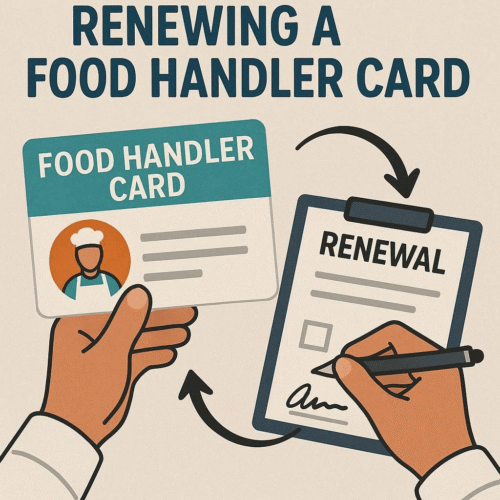
Food handler certificates are not permanent and must be renewed periodically to ensure food handlers maintain current knowledge of food safety practices and regulations. Renewal frequencies and requirements vary by jurisdiction.
Typical Renewal Periods
Most jurisdictions require a food handler certificate renewal every 2-5 years. California requires renewal every 3 years. Texas requires renewal every 2 years. Some states base renewal on the certification date, while others use calendar year renewals. Track your expiration date and begin the renewal process at least 30 days before expiration to maintain continuous compliance.
Renewal Process
Renewal typically requires completing a refresher course and passing an updated exam. Some jurisdictions allow abbreviated renewal courses that take less time than initial certification. Renewal costs are usually similar to initial certification fees. Many providers offer automatic renewal reminders to help you stay compliant.
Consequences of Expired Certification
Working with an expired a food handler certificate violates health codes and can result in fines for both the employee and employer. Health inspectors may issue citations during routine inspections. Employers may prohibit food handling duties until certification is renewed. Some jurisdictions require completing the full initial certification process if your certification has been expired for an extended period.
Career Benefits and Advancement
Food handler certificates provides significant career advantages beyond regulatory compliance. Certified food handlers demonstrate professional commitment, qualify for better job opportunities, and position themselves for advancement in the food service industry.
Employment Opportunities
Many employers prefer or require a food handler certificate even when not legally mandated. Certification demonstrates initiative and food safety knowledge, making you a more attractive candidate. Some positions require certification as a minimum qualification. Having current certification before job hunting streamlines the hiring process.
Wage and Salary Benefits
Certified food handlers may command higher wages than uncertified workers. Some employers offer pay increases upon certification completion. Advanced certifications like Food Protection Manager can lead to supervisory roles with significantly higher compensation. Industry surveys show certified food service workers earn 10-20% more on average than uncertified counterparts.
Professional Development Path
Food handler certificates are the foundation for advanced credentials. Consider progressing to Food Protection Manager certification (ServSafe Manager or equivalent) for supervisory roles. Specialized certifications in allergen management, HACCP, or food defense further enhance career prospects. Building a portfolio of certifications demonstrates expertise and commitment to food safety excellence.
Common Violations to Avoid
Understanding common food safety violations helps certified food handlers maintain compliance and protect public health. Health inspectors consistently cite these issues during routine inspections.
Temperature Control Violations
Storing food in the temperature danger zone (41°F to 135°F) is the most common violation. Hold cold foods at 41°F or below and hot foods at 135°F or higher. Use calibrated thermometers to verify temperatures regularly. Never leave perishable foods at room temperature for more than 2 hours (1 hour if above 90°F).
Personal Hygiene Violations
Inadequate handwashing is consistently among the top violations. Wash hands for at least 20 seconds with soap and warm water after using the restroom, handling raw meat, touching face or hair, and any activity that could contaminate hands. Change gloves between tasks and whenever they become contaminated. Never touch ready-to-eat foods with bare hands.
Cross-Contamination Violations
Using the same cutting board, utensils, or equipment for raw and ready-to-eat foods without proper cleaning causes cross-contamination. Maintain separate color-coded equipment for different food types. Store raw meat below ready-to-eat foods in refrigerators. Clean and sanitize all food contact surfaces between tasks.
Documentation Violations
Failing to maintain required temperature logs, cleaning schedules, and employee health records results in violations. Keep accurate, dated records of all monitoring activities. Document corrective actions when problems occur. Ensure all employees have current a food handler certificates on file.
Best Practices After Certification
Certification is just the beginning of your food safety journey. Implementing these best practices ensures you apply your knowledge effectively and maintain the highest food safety standards.
Continuous Learning
Stay informed about food safety updates, new regulations, and emerging foodborne illness threats. Follow FDA and USDA updates. Subscribe to food safety newsletters. Participate in additional training opportunities. Attend food safety workshops and conferences when available. Share knowledge with coworkers to build a strong food safety culture.
Lead by Example
Model proper food safety behaviors for other employees. Correct unsafe practices when observed. Mentor new employees on food safety procedures. Support management’s food safety initiatives. Contribute ideas for improving food safety systems. Your commitment to food safety influences the entire team’s behavior.
Speak Up About Safety Concerns
Report food safety hazards immediately to supervisors. Don’t ignore broken equipment, temperature abuse, or unsafe practices. Suggest improvements to procedures when you identify risks. Management relies on frontline employees to identify potential problems before they cause illness outbreaks.
Frequently Asked Questions
How long does a food handler certificate take?
Online a food handler certificate typically takes 2-4 hours to complete, including the training course and final exam. In-person training may take 4-8 hours. You can complete most online courses at your own pace, with the ability to pause and resume as needed. Immediate certification is available upon passing the exam with most online providers.
What score do I need to pass the food handler exam?
Most a food handler certificate exams require a passing score of 70-80%, depending on the jurisdiction and certification provider. Exams typically consist of 30-50 multiple-choice questions covering food safety principles. Most providers allow unlimited retakes if you don’t pass on the first attempt, though some may require a waiting period between attempts.
Is a food handler certificate the same as ServSafe?
ServSafe is a brand of food safety certifications offered by the National Restaurant Association. ServSafe Food Handler is one type of a food handler certificate, equivalent to certifications from other ANSI-accredited providers. ServSafe Manager is a more advanced certification required for supervisory positions in many jurisdictions. Both are widely recognized, but verify which specific certification your jurisdiction requires.
Can I work in food service without certification?
This depends on your jurisdiction’s requirements. Many states and localities allow new employees to work under supervision for 30-90 days while obtaining certification. However, you cannot perform certain food handling tasks without certification in some areas. Check with your local health department and employer for specific requirements. Never assume certification is optional—verify requirements before beginning work.
Does my a food handler certificate transfer to other states?
Most ANSI-accredited a food handler certificates are recognized across state lines, though some jurisdictions require state-specific training on local regulations. National providers like ServSafe, Learn2Serve, and FenixFoodSafety.com offer certifications accepted in most locations. When relocating or working in a new jurisdiction, verify your certification will be accepted or if supplemental training is needed. Some states require only their approved certifications.
What’s the difference between food handler and food manager certification?
Food handler certificates covers basic food safety practices for employees who prepare, handle, or serve food. Food manager (or food protection manager) certification is more advanced and required for supervisory personnel responsible for food safety programs. Manager certification requires more extensive training (8-16 hours), covers advanced topics like HACCP, and requires a proctored exam. Manager certification typically costs more ($100-300) and demonstrates higher-level expertise.
How much does a food handler certificate cost?
Food handler certificates costs typically range from $7 to $35 for online courses and $15 to $50 for in-person training. Prices vary by provider, delivery method, and whether additional materials are included. Some health departments offer free or subsidized certification programs. Employers often cover certification costs as a business expense. Group discounts may be available for organizations training multiple employees simultaneously.
When do I need to renew my a food handler certificate?
Renewal requirements vary by jurisdiction but typically range from every 2 to 5 years. California requires renewal every 3 years, Texas every 2 years, and some states every 5 years. Your certification card shows the expiration date. Begin the renewal process at least 30 days before expiration to maintain continuous compliance. Some providers offer automatic renewal reminders via email.
Can I take the food handler test in languages other than English?
Many certification providers offer training and exams in multiple languages including Spanish, Chinese, Vietnamese, Korean, and others. Language availability varies by provider and jurisdiction. Check with your chosen provider to confirm they offer the exam in your preferred language. Some providers offer courses in 10+ languages to accommodate diverse workforces.
What happens if I lose my food handler card?
Most certification providers allow you to request a replacement card for a small fee (typically $5-15). Online providers usually maintain electronic records and allow you to reprint your certificate for free or a nominal charge. Contact your certification provider directly to request a replacement. Keep a digital copy or photo of your certification as a backup. Some jurisdictions maintain databases where employers or inspectors can verify your certification status.
Conclusion
Food handler certificates are an essential credential for anyone working in the food service industry. This comprehensive guide has covered everything from state-specific requirements and the certification process to exam preparation strategies and career benefits. By obtaining and maintaining your a food handler certificate, you demonstrate professional commitment to food safety, enhance your career prospects, and play a vital role in protecting public health.
Ready to get certified? Visit FenixFoodSafety.com for ANSI-accredited online a food handler certificate accepted nationwide. Complete your training in just 2-3 hours with immediate certification upon passing. Join thousands of food service professionals who trust Fenix Food Safety for comprehensive, convenient, and affordable food safety training.
Useful Links
Temperature Control for Food Safety: Complete Guide
Cross-Contamination Prevention: Complete Guide
Complete HACCP Implementation Guide
Food Allergen Management: Complete Guide
Food Handler Training Guide: Complete Beginner’s Guide to Getting Your Food Handler Card